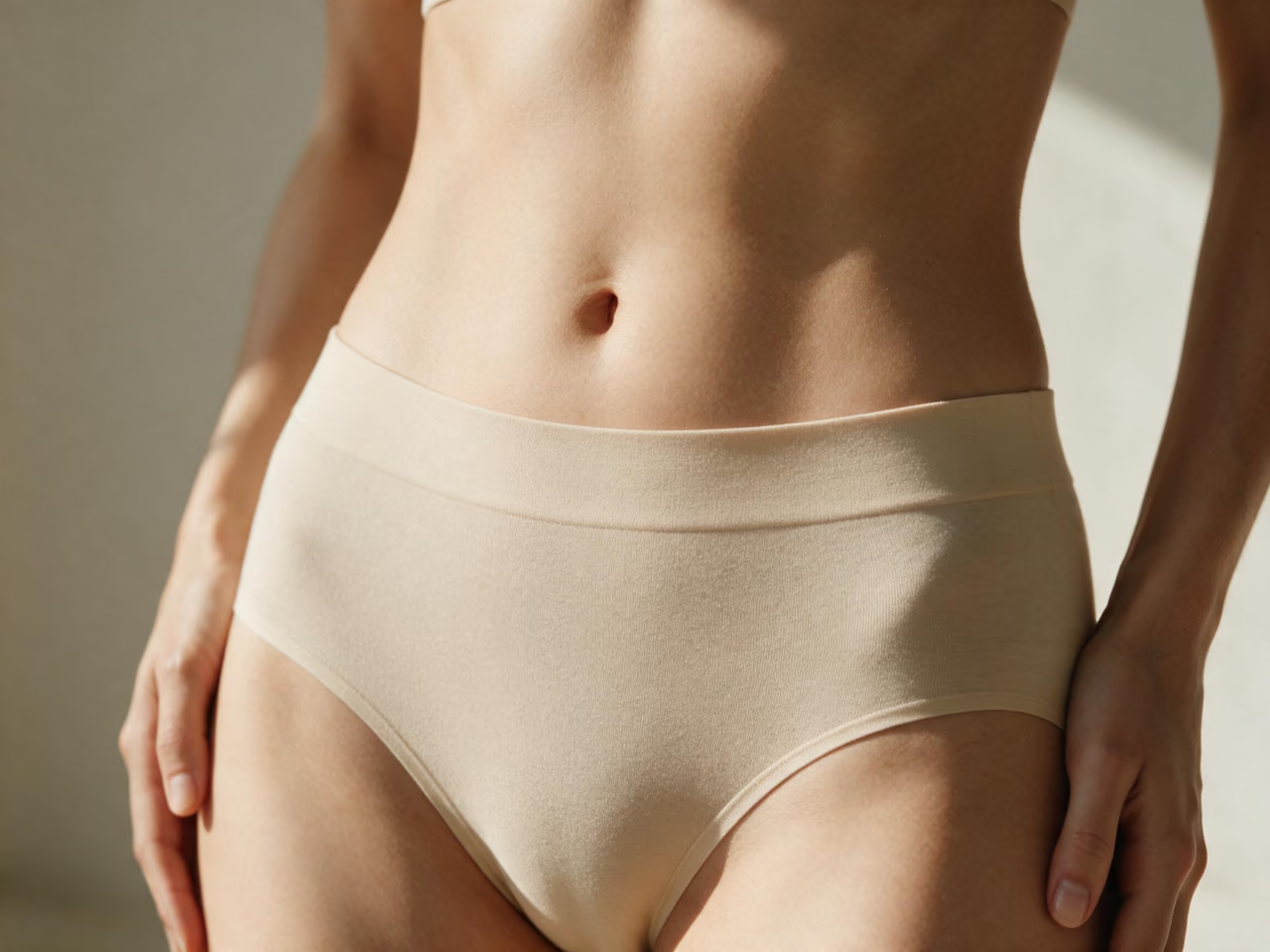

High-definition liposculpture removes localised fat and also works on the relief: instead of emptying an area evenly, it respects the natural shadows of the body so that the muscle you already have underneath comes through.
The difference from conventional liposuction is in the aim. Classic liposuction sets out to reduce volume; high definition sets out for a particular shape, and for that it has to leave a thin layer of fat where it belongs and take it away where the muscle should show. It is a longer operation and one that depends far more on planning.
It is worth saying plainly: it is not a treatment for obesity, nor a substitute for losing weight. It works on localised fat in someone whose weight is stable. If the weight goes up significantly afterwards, the result is lost, because the fat cells that remain are still able to grow.
It usually helps when there is
- Localised fat that does not give way with sustained diet and exercise.
- A stable weight over recent months, close to your usual one.
- Abdomen, flanks, back, arms or thighs with a specific excess.
- Good skin quality, able to retract after surgery.
- Expecting to define the figure, not to drop a dress size.
Worth discussing first if
- A high body mass index, or a weight still coming down.
- Markedly lax skin: it may need a different operation, not lipo.
- Hoping to lose weight through this; that is not what it does.
- A history of thrombosis, significant varicose veins or a clotting disorder.
- Smoking, or the contraceptive pill, without having discussed it beforehand.
- Anaemia, uncontrolled diabetes or another condition not under control.
None of these rules the procedure out on its own; all of them change the conversation.
Define, reduce or move
Procedures with quite different aims live under the same name. Which one your case calls for depends on your fat, your skin and what you want to achieve.
High definition
Removes fat selectively so that your own muscular relief shows. It asks for good skin quality and a stable weight; it is the variation that demands most planning.
Classic liposculpture
Sets out to reduce volume and smooth the contour without marking out muscle. It is the right indication when the skin would not support a pronounced definition.
With fat transfer
The fat removed is processed and injected into the buttocks or hips to rebalance the figure. Part of the transferred volume is reabsorbed over the first few months.
What is taken and what is left
Planning is done standing up and on your body, marking the areas before going into theatre: where there is excess, where the natural shadow falls and what relief lies underneath. Without that map, a definition lipo produces markings that do not match the patient's anatomy and look artificial.
How much is left matters just as much. Taking away too much fat leaves irregularities, adhesions and dips that are hard to correct afterwards — far harder than taking away too little. That is why the approach is conservative at the first operation: you can always refine, but you cannot put back what is no longer there.
The total volume aspirated also has a safety limit. A liposculpture is not measured in litres removed but by the result, and stretching that number raises the risks without improving the shape.
From consultation to discharge
This is surgery with an active recovery: the compression garment and the drainage sessions are not optional, they are part of the result.
Consultation and planning
Your fat, your skin and your weight are assessed, the areas to be worked on are defined and we talk about what you are hoping for. You leave with the alternatives explained, their risks, and a written quote.
Pre-operative work-up
Laboratory tests, assessment by the anaesthetist and, depending on age and history, other referrals. You will be told to stop smoking and to stop certain medicines in advance.
The surgery
In a licensed surgical facility, with an anaesthetist present throughout. The incisions are small and placed in creases. The compression garment goes on at the end.
Check-ups and drainage
Lymphatic drainage sessions from the first few days, and scheduled check-ups. The garment is worn continuously for as many weeks as you are told.
Recovery, week by week
The body takes months to come down and for the shape to settle. What you see at one month is not the result, and that wait is the hardest part.
-
First 72 hours
Pain like severe muscle soreness, swelling and fluid draining from the incisions. Relative rest, but you are asked to walk around the house from day one to prevent thrombosis.
-
Weeks 1 to 2
Lymphatic drainage begins. Extensive bruising appears and changes colour. The garment is worn day and night, and the swelling can make you look wider than before.
-
Weeks 3 to 6
Back to desk work and to social life. The skin may feel hardened in places: that is fibrosis forming, and it is worked on with massage and drainage. Still no impact exercise.
-
Months 2 to 4
The swelling clearly settles and the contour starts to show. Gradual return to exercise as advised.
-
Around 6 to 12 months
This is taken as the final result, with the skin retracted and the fibrosis resolved. Keeping it depends on holding your weight.
Risks, and what is not promised
All surgery carries risks, and liposculpture is no exception: seroma (a collection of fluid), haematomas, fibrosis, irregularities or dips in the contour, changes in sensation, and healing problems. There are also uncommon but serious risks, such as venous thrombosis and fat embolism, which are prevented with early mobilisation, compression stockings and whatever measures the anaesthetist advises.
The risk rises when several operations are combined in one session or when high volumes are aspirated. That is why the advice may be to split the plan into two stages, even though it means two recoveries.
These risks are reduced by a sound indication, complete pre-operative tests, a licensed surgical facility and serious follow-up. They are not eliminated. The ones that apply to your case are explained to you in the consultation and set down again in writing in the informed consent you sign before surgery.
The information on this page is for guidance and does not replace an in-person medical consultation. Medical practice is an obligation of means, not of result.
What people ask most about liposculpture
That is not what it is for, and it is worth being clear about before surgery. Liposculpture changes the shape, not the scales: the fat that comes out weighs far less than people imagine, and part of the weight lost at first is fluid that comes back.
If what you are after is significant weight loss, the road starts somewhere else, and you will be told so in those words in the consultation.
The fat cells that are removed do not grow back, but the ones left elsewhere in the body can get bigger if you put on weight. The result holds as long as your weight stays stable.
When someone gains several kilos after a lipo, the fat tends to settle in areas other than the ones treated, and that can change the proportions of the figure.
The usual range is four to eight weeks of continuous wear, and then a period of daytime wear only. The exact figure depends on how extensive the surgery was and on how your skin is doing, and it is adjusted at the check-ups.
It is not an accessory: the compression holds the tissues while they stick back down and helps the skin retract. Giving the garment up early is one of the avoidable causes of irregularities.
These are specific massages that help move accumulated fluid and prevent fibrosis, the patchy hardening that appears during healing. They are done by trained staff and usually start in the first week.
Yes, they are necessary. A good part of the difference between an orderly recovery and one with irregularities comes down to whether they were kept up.
The incisions are a few millimetres long and are placed inside natural creases or in areas covered by underwear. Over time they usually become hard to notice.
How they develop depends on each person's skin: in skin prone to hypertrophic scars or keloids the behaviour is less predictable, and that is assessed in the consultation.
With cellulite, not much: it is a problem of fibrous bands under the skin, not of fat volume, and a lipo can even make it more obvious by removing the padding that was disguising it.
With loose skin, no. If the skin has lost its elasticity, removing the fat that was holding it out leaves it slacker. In those cases the right indication may be surgery that removes skin, and that is discussed in the consultation by name.
We do not publish prices, because the cost depends on the number of areas, on how long the procedure takes and on the surgical facility: any figure on its own would end up being wrong for your case.
After the consultation you receive a written quote setting out what is included — the drainage sessions and the garment among them — and what is not, and how long it is valid for.
Question not answered here? There are more answers in the frequently asked questions.