
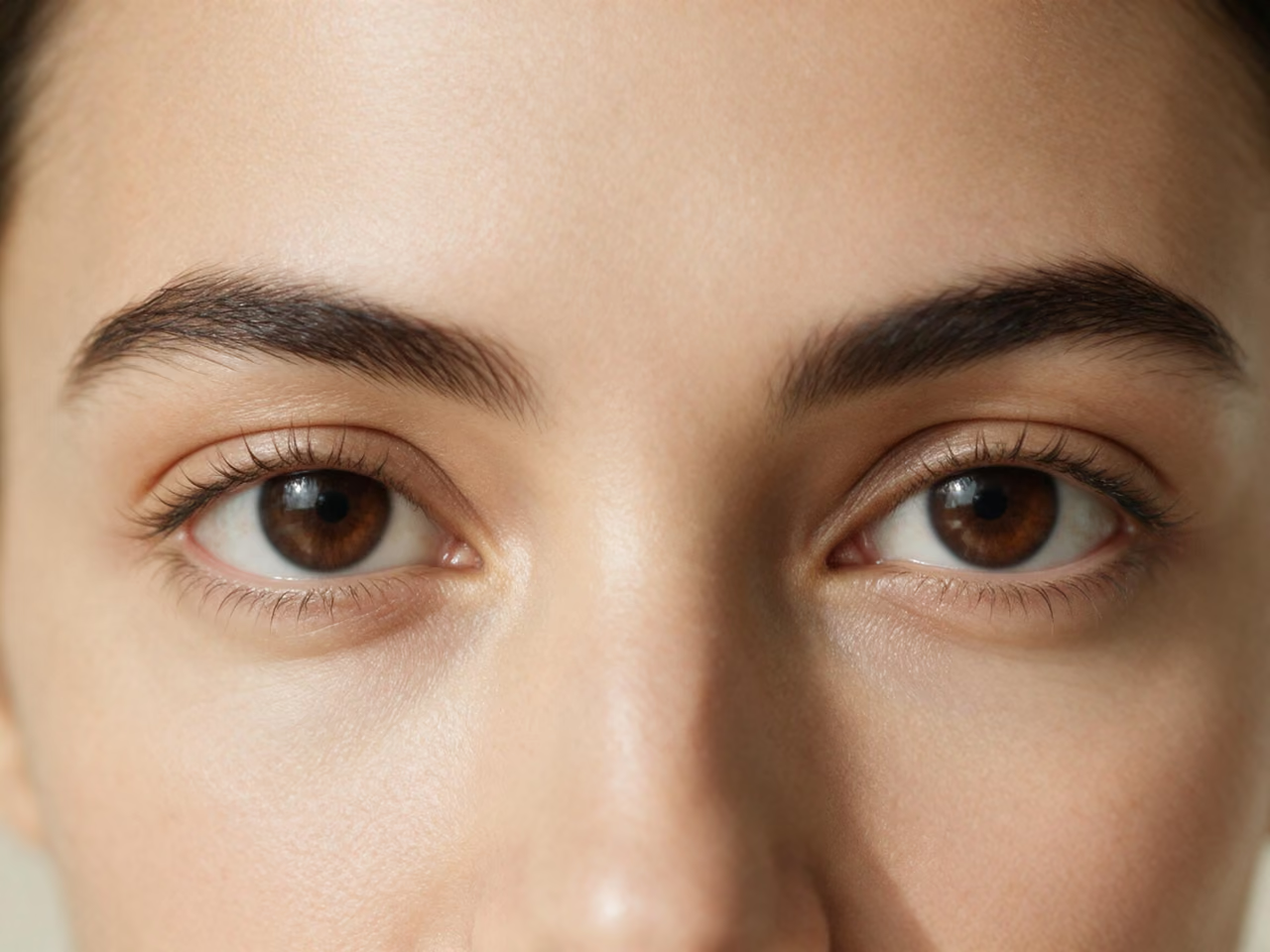
Blepharoplasty corrects the excess skin of the upper eyelids and the bags of the lower ones. It is one of the operations with the best ratio between how little it involves and how much it changes the expression: the eyes stop looking tired without the features of the face changing.
In the upper lid the problem is usually excess skin resting on the lashes, and in advanced cases it starts to cut into the upper field of vision. In the lower lid what shows are the bags, which are not fat accumulated through neglect but fat from the orbit pushing forward as the septum that held it back weakens.
Before operating there is a question that does not always get asked: is it the eyelid that has dropped, or the eyebrow? They are different things and they are corrected differently. Taking skin off the eyelid when it is the brow that has come down pulls the area downwards and leaves the eyes looking worse than they started.
It usually helps when there is
- Excess skin on the upper lid, resting on the lashes.
- Marked bags on the lower lid, present even on waking.
- Eyes that read as tired or sad without matching how you feel.
- Difficulty putting make-up on the upper lid for lack of space.
- A reduced upper field of vision because of the excess skin.
Worth discussing first if
- What has dropped is the brow, not the lid: operating here would make it worse.
- Dry eye, already diagnosed or symptomatic: surgery can accentuate it.
- Wearing contact lenses continuously, which calls for a specific plan.
- Uncontrolled thyroid disease, which changes the position of the eye.
- A history of recent refractive surgery.
- Glaucoma or another eye condition under treatment.
None of these rules the procedure out on its own; all of them change the conversation.
Upper, lower or both
These are different operations, with different incisions and different recoveries, often done in the same session. Which one your case calls for is decided in the consultation.
Upper eyelids
The excess skin is removed and, if there is any, some fat. The incision sits hidden in the natural crease of the lid, which is what makes it practically invisible once healed.
Lower eyelids
The fat that forms the bags is repositioned or removed, and any excess skin is dealt with. The incision runs just below the lash line.
Transconjunctival route
For bags without excess skin: access is from inside the lid and no external scar is left. It is usually the indication in younger people.
How much is taken and how much is left
The first step is telling where the problem comes from. The position of the brow, the real amount of excess skin, the tone of the lower lid and whether the eye is dry are all assessed. Only then is it decided what to operate on, because a share of tired-looking eyes are corrected by lifting the brow and not by touching the lid.
The measure is conservative for a specific reason: taking too much skin from the upper lid stops the eye closing properly, and taking too much from the lower lid can pull the margin down and leave it away from the eyeball. Both are complications that are hard to correct, and both come from removing more than was needed.
In the lower lid the current tendency is to reposition the fat towards the groove over the cheekbone rather than simply removing it. Emptying the bag and no more leaves a hollow that over the years reads as a sunken eye — another way of looking tired.
From consultation to discharge
This is the operation on this list with the shortest recovery, but the work-up includes a step that is not worth skipping: the eye assessment.
Consultation and assessment
The eyelids, the position of the brow and the quality of the skin are examined, and it is ruled out that the cause lies in another structure. You leave with the alternatives explained, their risks, and a written quote.
Pre-operative work-up
Laboratory tests, assessment by the anaesthetist and, depending on the case, an ophthalmological assessment — especially if there are dry-eye symptoms or a history of eye problems.
The surgery
In a licensed surgical facility, usually under local anaesthesia with sedation and with an anaesthetist present. Marking is done with the patient sitting up, because the eyelids shift position when lying down.
Follow-up
Stitches out between the fifth and seventh day, with scheduled check-ups. Artificial tears are prescribed for the first few weeks.
Recovery, day by day
It is short and not very painful, but very visible in the first few days: the eye area bruises easily and takes its time to come down.
-
First 48 hours
Swelling and bruising that keep building, a gritty feeling and slightly blurred vision from the ointment. Cold locally and rest with the head raised. It bothers little.
-
Days 3 to 7
The bruising reaches its worst and then starts turning yellow. The stitches come out towards the end of this period. Reading and screen use are back to normal.
-
Weeks 2 to 3
Back to social life; make-up can be used once the stitches are out. Some swelling persists, more obvious on waking. Still no impact exercise.
-
Months 1 to 3
The scars are in their reddened phase and are looked after with strict sun protection. Dryness of the eye, if it appeared, usually starts to ease.
-
Around 6 months
Settled result and mature scars. On the upper lid they usually end up practically hidden inside the crease.
Risks, and what is not promised
All surgery carries risks, and blepharoplasty is no exception: haematoma, infection, asymmetry between one side and the other, scars that develop unpredictably, and dryness of the eye, which is the most frequent complaint and is usually temporary but can persist.
There are two specific complications worth understanding: lagophthalmos, the difficulty closing the eye completely when too much skin was taken from the upper lid, and ectropion or retraction of the lower lid, which pulls it away from the eyeball. Both are prevented by being conservative with the amount removed, and both may need later correction.
There is also a very uncommon but serious complication, retrobulbar haematoma, which can threaten vision and is an emergency. That is why at discharge you are told which symptoms — severe increasing pain, loss of vision — mean calling immediately rather than waiting for the check-up.
These risks are reduced by a sound indication, an ophthalmological assessment where appropriate, a licensed surgical facility and serious follow-up. They are not eliminated. The ones that apply to your case are explained to you in the consultation and set down again in writing in the informed consent you sign before surgery.
The information on this page is for guidance and does not replace an in-person medical consultation. Medical practice is an obligation of means, not of result.
What people ask most about blepharoplasty
Crow's feet, no. They are expression lines produced by muscle contraction, and they are treated with botulinum toxin or other skin treatments, not by removing eyelid skin.
What does improve is the excess skin of the lid and the fold resting on the lashes. Combining the two is common, and it is discussed in the consultation.
The fat that is removed or repositioned does not build up again in the same quantity, which is why the result on the bags tends to last. What does carry on is ageing: the skin goes on losing elasticity and the cheekbone can drop over the years.
It is more common to need a touch-up on the upper lid, where the skin can become excessive again with time, than on the lower one.
On the upper lid it stays hidden inside the natural crease and, once mature, is usually practically invisible with the eye open. On the lower lid it runs just below the lashes and also tends to hide well.
How it develops depends on each person's skin, and in the first few months it looks red. Sun protection during those months changes the final result a great deal.
Reading and screen use are usually possible from the first few days, in short stretches and with artificial tears, because the eyes tire more than usual. For going back to work in person, seven to ten days is realistic, which is when make-up covers the bruising.
If your work is highly visible, it is worth allowing a couple of extra days.
Yes, but not immediately. The usual wait is two to three weeks, and sometimes longer if there is dryness. Glasses are used in the meantime.
If you depend on contact lenses daily, say so in the consultation: it changes the post-operative plan and it is better to have it accounted for before the date.
That is not the aim, and in fact it is what we set out to avoid. A well-indicated blepharoplasty removes what is in excess and leaves the shape of the eye as it was: what changes is that the gaze stops looking heavy.
The shape of the eye is altered when too much skin is removed or the lower lid is pulled on, and those are precisely the complications that a conservative measure sets out to prevent.
We do not publish prices, because the cost depends on whether the upper lids, the lower lids or all four are operated on, and on the surgical facility: any figure on its own would end up being wrong for your case.
After the consultation you receive a written quote, itemising what is and is not included, and how long it is valid for.
Question not answered here? There are more answers in the frequently asked questions.