An abdominoplasty removes excess skin and fat from the abdomen and repairs the separation of the rectus muscles. It is the only way to correct an abdominal wall stretched by pregnancy or by weight loss.
After one or more pregnancies, or after significant weight loss, the abdomen is left with two problems that no amount of exercise solves. The first is the skin: it stretched beyond what it can pull back and now there is too much of it, with stretch marks and a fold hanging over the caesarean scar. The second is the diastasis: the rectus muscles, which run vertically down the centre of the abdomen, separated and left a soft wall that bulges, especially at the end of the day.
An abdominoplasty deals with both: it removes the excess skin and brings the muscles back together along the midline. It is major surgery and that is worth saying plainly: it takes several hours, it requires a hospital stay, it has a three-to-four-week recovery and a long, permanent scar in the lower abdomen. In return, it is one of the operations with the highest satisfaction rates, because it gives back something the person had given up on.
It usually helps when there is
- Excess abdominal skin that does not respond to exercise or diet.
- Separation of the rectus muscles after pregnancy.
- Stable weight for at least six months.
- Family complete, or postponed.
- Good general health and not smoking.
Worth discussing first if
- A planned pregnancy: a new one undoes the muscle repair.
- Current smoking, which multiplies the risk of skin necrosis.
- Uncontrolled obesity: losing weight first improves both the result and the safety.
- A personal or family history of thrombosis.
- Expecting to lose weight through the surgery: that is not what it does.
None of these rules the procedure out on its own; all of them change the conversation.
According to how much skin is left over
The choice is set by the amount of skin and by whether or not there is a diastasis.
Mini tummy tuck
Treats only the area below the navel, with a shorter scar and without moving the navel. Valid when there is little excess skin and the diastasis is low or absent.
Full abdominoplasty
The usual technique. It treats the whole abdomen, repairs the diastasis along its full length and moves the navel to its new position.
With associated liposuction
Adds treatment of the flanks and the waist for a complete contour. It calls for judgement about the planes so as not to compromise the blood supply to the skin.
The muscle repair is the part you do not see
Removing skin is the visible part of this operation; bringing the muscles together is what holds the result. The diastasis is closed with a continuous suture along the whole midline, from the breastbone to the pubis, and it is that repair that gives back the waist and takes away the bulge. An abdominoplasty that only removes skin leaves an abdomen that is flat standing up and bulging sitting down.
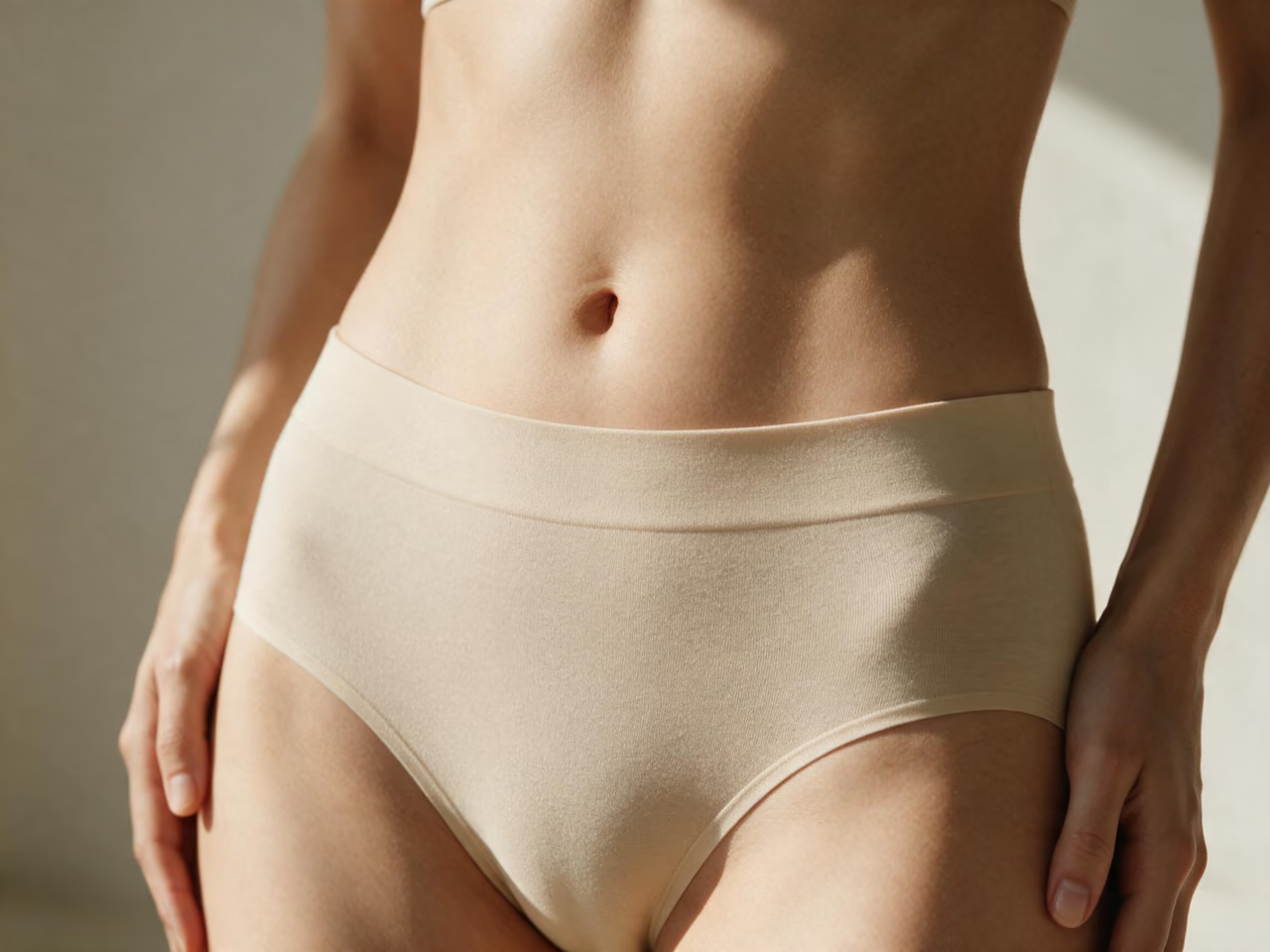
The scar is designed low, inside the underwear line, and as horizontal as possible. Its length depends on how much skin has to be removed, not on preference: forcing it to be short means closing under tension, and a scar under tension widens.
And one decision taken on the table: the table is flexed to check the closure is not tight. If it is, the plan is adjusted. That detail is the difference between a fine scar and one that opens.
How the process goes
From the first consultation to discharge, with the usual timings for this surgery.
Consultation
The excess skin, the diastasis, the weight and the medical history are assessed. The thrombosis risk is calculated and the technique and the level of the scar are decided.
Pre-operative work-up
Laboratory tests, assessment by the anaesthetist and, depending on the case, by internal medicine. Stopping smoking at least a month beforehand. The informed consent form is signed.
Surgery
Under general anaesthesia, with compression stockings and thrombosis prophylaxis. Skin resection, muscle repair, repositioning of the navel and layered closure with drains.
Follow-up
Drains removed in the first few days, check-ups at one week, one month, three months and one year, with active scar care.
Week by week
It is the most demanding recovery in the body area, and walking from day one is part of the treatment.
-
Days 1 to 7
Compression garment at all times, a slightly flexed posture and drains for the first few days. You walk from the first hours, a little and often: that is what prevents thrombosis.
-
Weeks 2 to 3
Posture straightens up gradually. Discomfort on coughing or laughing because of the muscle repair. No lifting and no driving.
-
Weeks 4 to 6
Back to desk work at around three or four weeks. Long walks allowed. Garment still worn all day.
-
Months 3 to 12
Abdominal exercise once cleared, from the third month. The area loses sensation below the navel and regains it slowly. The scar is still maturing.
Risks, and what is not promised
The most serious risk of this surgery is deep vein thrombosis and its complication, pulmonary embolism. It is uncommon and it is serious, which is why the risk is calculated before operating and specific measures are applied: compression stockings, early mobilisation and preventive medication where appropriate. Walking from day one is not recovery advice: it is prevention.
Other risks: seroma — the most frequent, a collection of fluid that may need to be drained with a needle — haematoma, infection, healing problems, skin necrosis above all in smokers, a widened or hypertrophic scar, asymmetry, contour irregularities and permanent loss of sensation in the skin of the lower abdomen.
An abdominoplasty is not weight-loss surgery and does not replace a diet. And a new pregnancy or a significant weight gain can undo the muscle repair. These risks are reduced by stable weight, giving up smoking, antithrombotic prophylaxis and a tension-free closure. They are not eliminated. The ones that apply to your case are set out in writing in the informed consent form.
The information on this page is for guidance and does not replace an in-person medical consultation. Medical practice is an obligation of means, not of result.
What people most often ask about abdominoplasty
No. Liposuction removes fat and needs the skin to pull back on its own; an abdominoplasty removes the skin that is left over and repairs the separated muscles.
If your skin is good and it is only fat, liposuction is what is indicated. If there is excess skin or a diastasis, liposuction alone leaves the abdomen just as loose and with less filling it out.
In the lower abdomen, horizontal and inside the line of underwear or a swimsuit. Its length depends on how much skin has to be removed.
It is permanent and it is the real trade-off of this operation. Over time it fades and flattens, but it does not disappear.
You can, and the pregnancy proceeds normally. What happens is that the abdominal wall stretches again and the muscle repair can come undone, so part of the result is lost.
That is why the sensible thing is to have the surgery once your family is complete or clearly postponed.
Because the most serious risk of this operation is clots forming in the legs, and being immobile is the main thing that encourages it.
Walking a little and often from the first hours, together with the compression stockings, is the most effective way to prevent it. It is not optional.
Question not answered here? There are more answers in the frequently asked questions.